

First Class Executive Travel · Updated
01 — Start with every traveller
Children belong in the passenger count
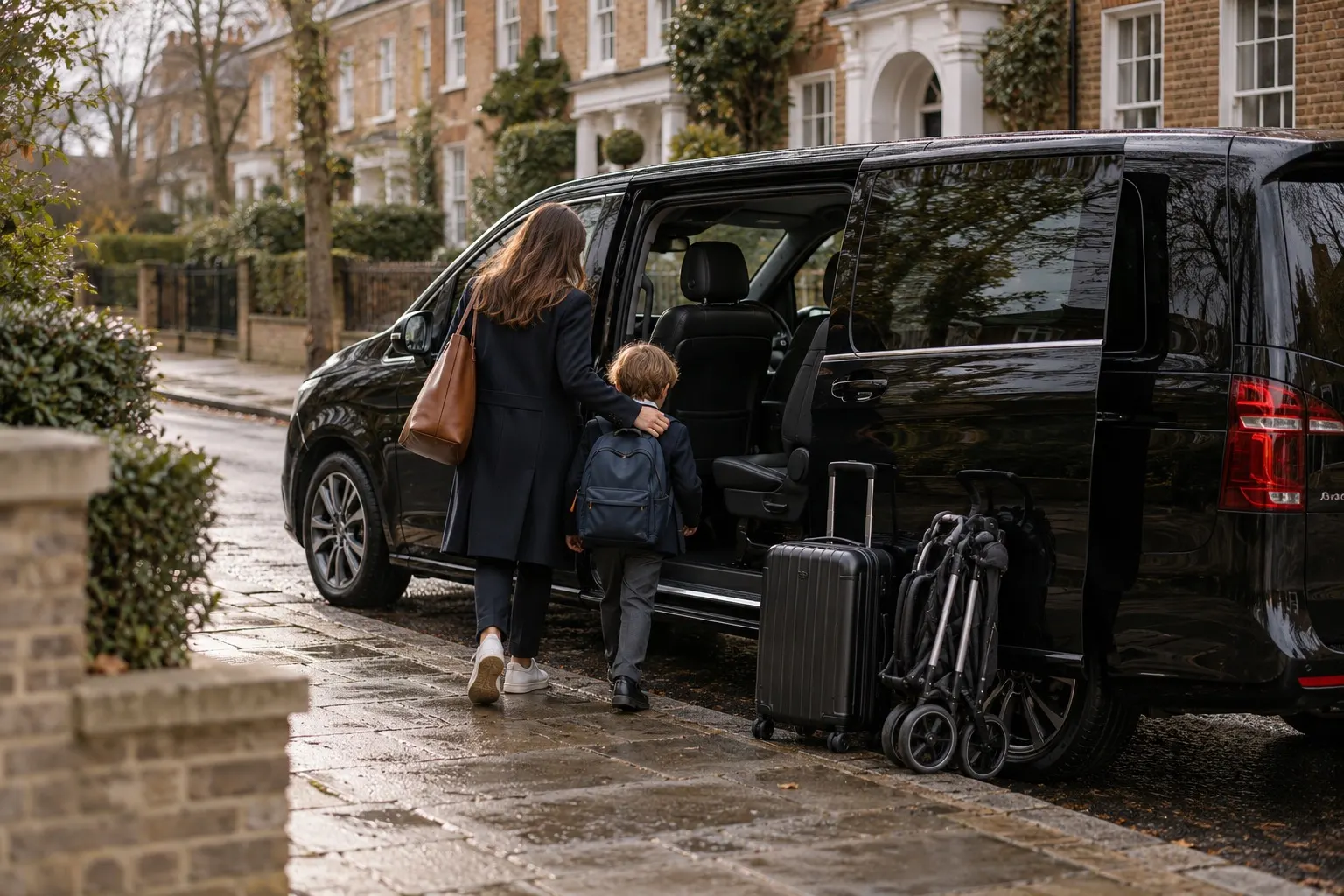
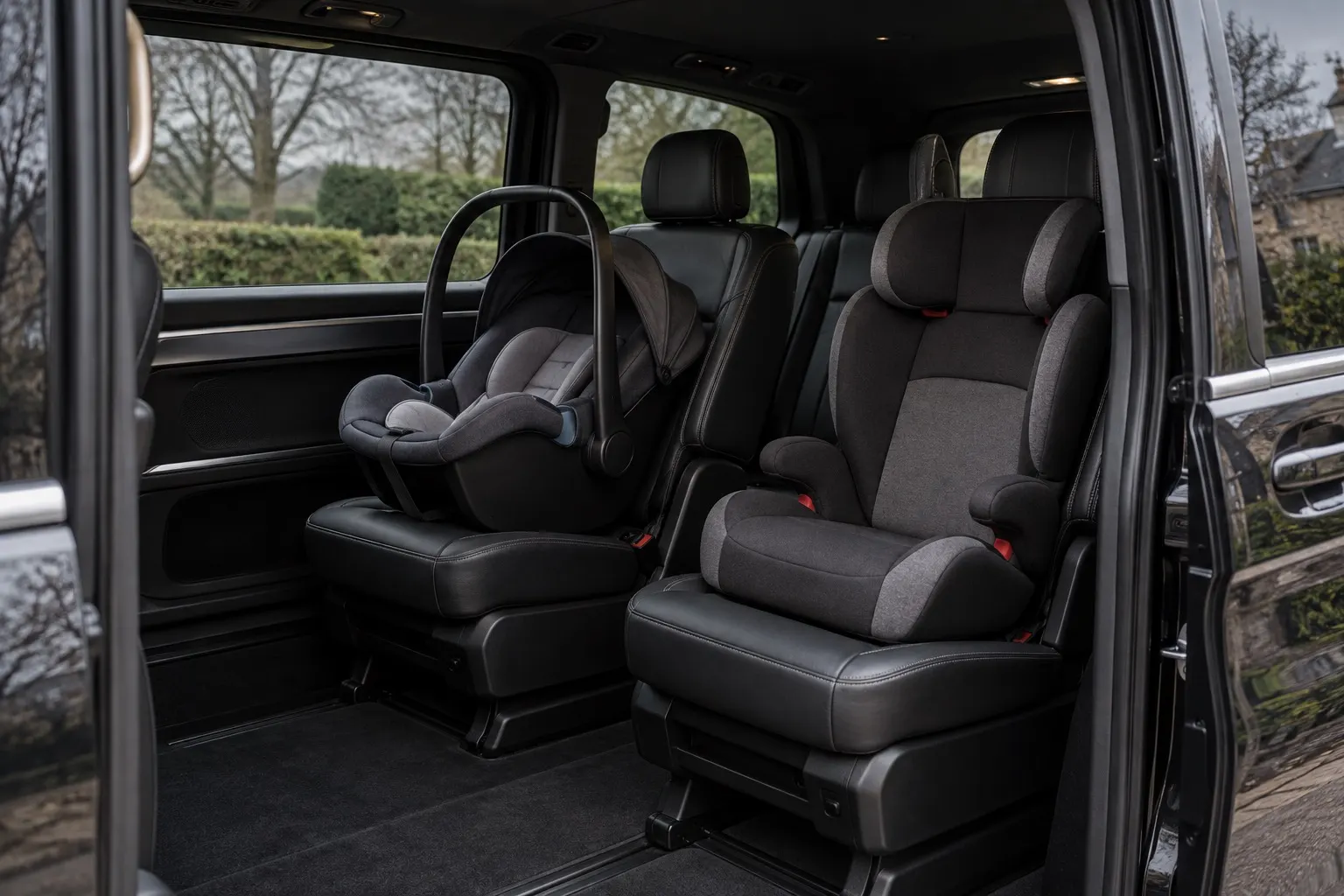
List every adult and child who will occupy a seat, including a baby or a passenger joining on a later leg. The booking team needs the largest travelling group across the itinerary before discussing vehicle class. Do not treat a young child as part of the luggage allowance. Provide the lead adult's mobile and identify any organiser who will not be in the vehicle. State who can authorise a change. At a busy airport, station, hotel or event, send the actual meeting instruction directly to the travelling adult. The family transport scenes on this page are illustrations, not photographs of an actual FCET car, supplied seat, booking or permitted meeting point. Child seats and booster seats are available on request. Make the request before travel, provide the child information the booking team asks for and confirm the seat arrangement when the booking is finalised. Add the seat request while the passenger group and vehicle are being discussed, rather than waiting until collection. Check the current GOV.UK rules for the journey and send updated passenger or seat information whenever the plan changes. The pictured seats are illustrative, not a fitting guide or a promise of a particular restraint.
02 — Official rules
Use GOV.UK for the current legal position
GOV.UK publishes the current child car-seat rules for taxis and private hire vehicles. Check the official guidance for the journey, then tell FCET which child or booster seat you want to request before the vehicle is confirmed. Provide the requested seat information for each child, especially when more than one child travels. Ask whether every requested seat is available for the booking and update the passenger and seat information before collection if the plan changes.
The useful principle
A family booking starts with every traveller and every bag, then adds the requested seat information before allocation.
03 — Buggies and bags
Describe everything travelling with the family
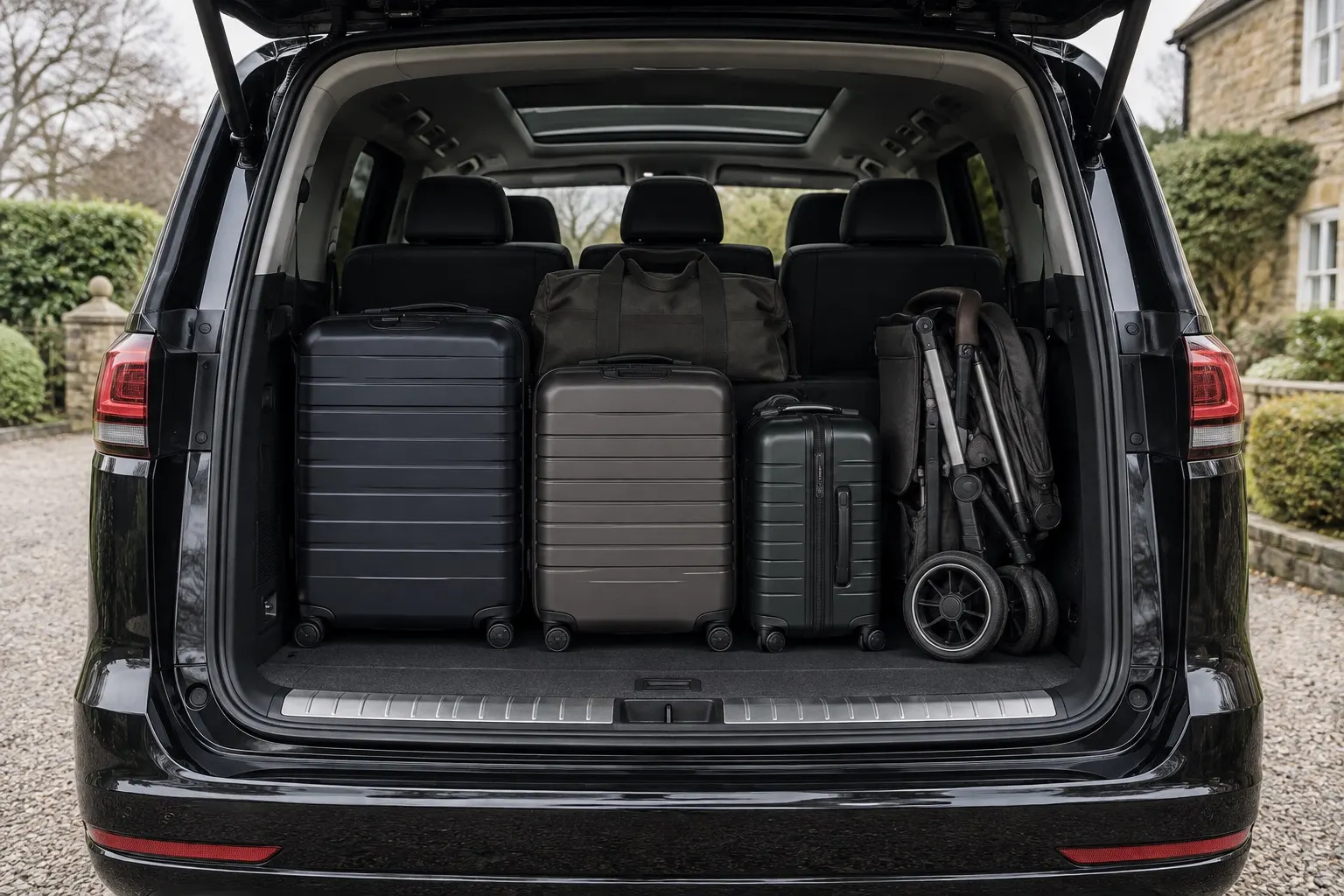
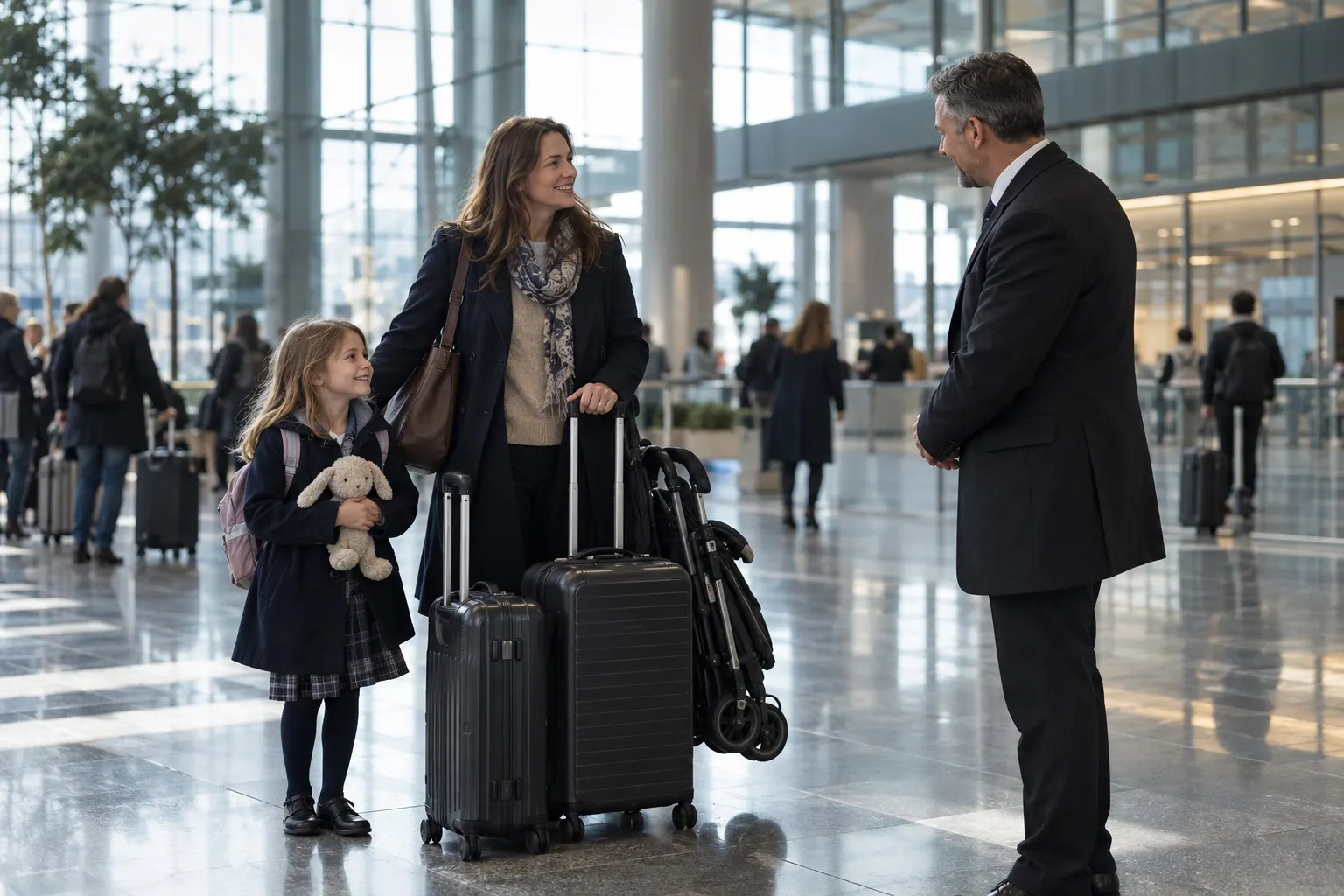
List suitcases, cabin bags, folded buggies, travel cots, mobility aids and unusually shaped items. Passenger seating and luggage space must be considered together. A vehicle that seats the party on paper may not hold the same party's full holiday or day-trip load. Say whether a buggy folds and identify anything that cannot be placed in the luggage area. The booking team can then compare Business, Business Estate, XL, First or SUV classes with the actual passenger group, requested seats and luggage. Use full addresses and the correct entrance. For an airport arrival, provide the operating flight, terminal and travelling adult's mobile; flight tracking follows the recorded aircraft, not the family's progress through formalities. For other journeys, identify the public or authorised meeting place clearly. Keep children together with the lead adult during a public meeting and follow the confirmed contact method. If another household joins, assign the passengers, seats and luggage to the relevant vehicle before travel. One current plan removes several informal assumptions from the handover.
04 — Family journey brief
Four details to confirm together
- Travellers
- Every adult and child
- Seat request
- Agreed before travel
- Load
- Cases, buggies and bags
- Rules
- Check current GOV.UK guidance
05 — Related journeys
Continue planning
06 — Before departure
Check the complete family booking
Review the date, addresses, entrances, passenger names, adult contact, child or booster-seat request, luggage, buggy details, stops, destination and vehicle class. For airport travel, verify the direction, operating flight and terminal. Send a correction whenever the family or load changes. FCET confirms journey cost at booking for the agreed scope. Before travel, keep the confirmed seat request with the passenger list, vehicle class, luggage details and current GOV.UK guidance so the family has one clear plan for collection.
What clients ask us
Frequently asked questions
24/7, 365 days · 100 Berkshire Place, Wharfedale Road, Winnersh, Berkshire, RG41 5RD