

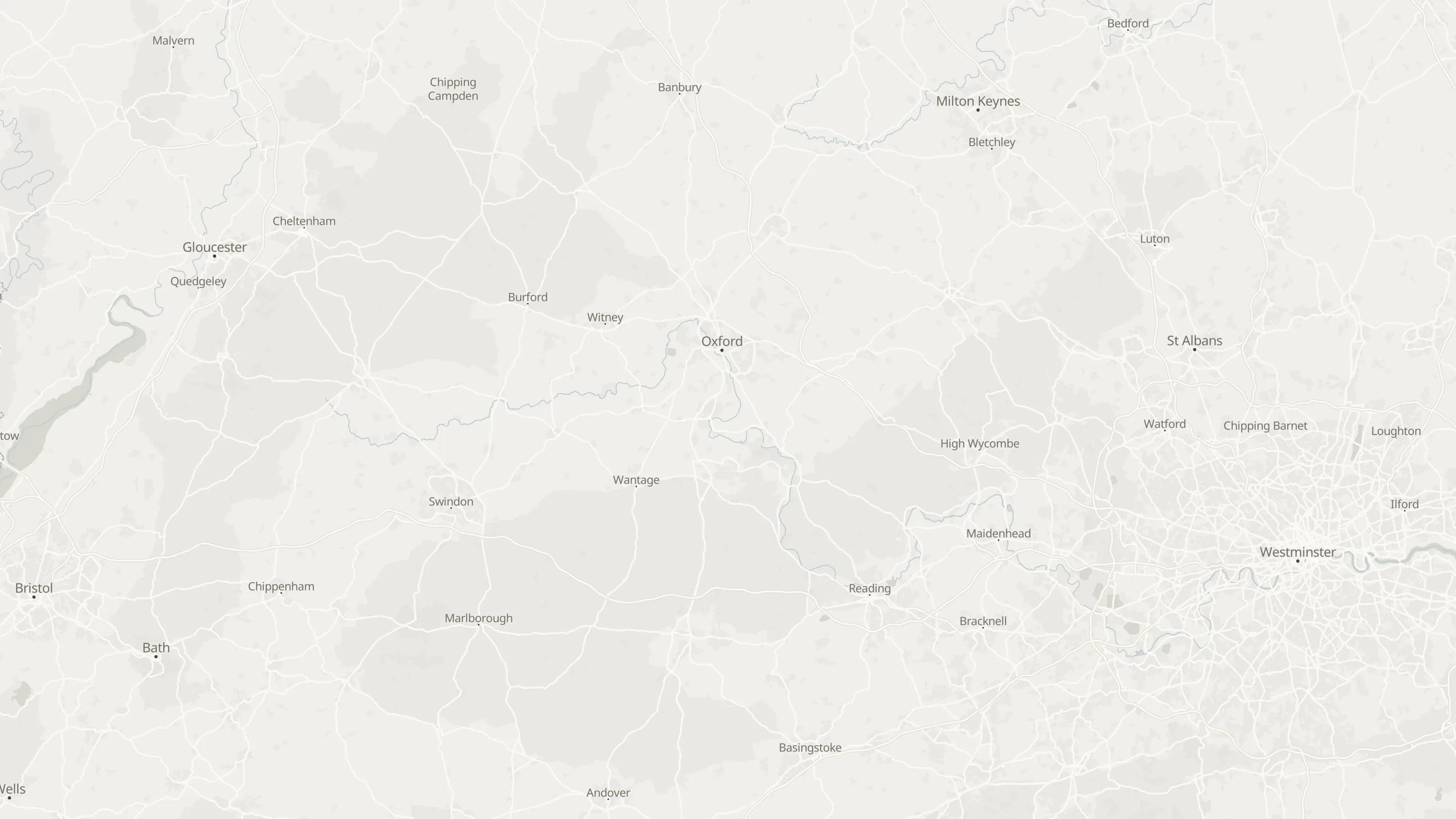
- 76.8miles
- planning distance
- 90min
- weekday morning estimate
- 24/7service
- booking office
Road times are live-traffic estimates for a weekday morning; your quoted price uses your exact addresses.
01 — The destination matters
Name the Milton Keynes building and reception
A Reading to Milton Keynes journey may serve Milton Keynes Central station, a business reception, hotel, campus or private address. Those destinations are not interchangeable. The booking uses the organisation or place name with its complete address and entrance so the chauffeur has a defined handover rather than a city-wide instruction.
Milton Keynes Central is the representative endpoint for the displayed route. A meeting elsewhere in the city remains the actual destination. When a programme combines the station with an office or hotel, each becomes a separate call with its own timing.

02 — Arriving in Milton Keynes
A city-centre appointment needs its exact entrance
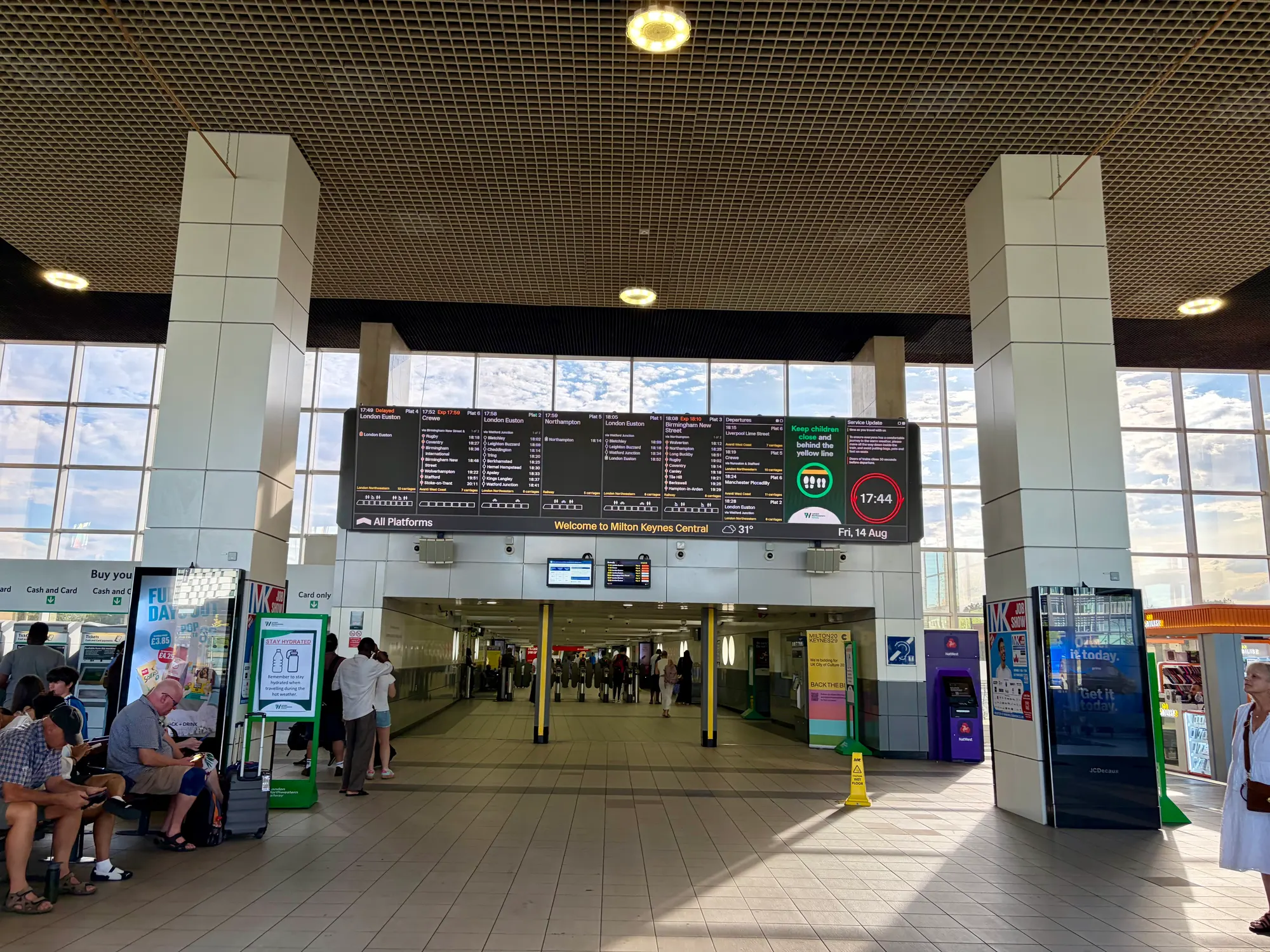
The Hub skyline illustrates central Milton Keynes, not the booked destination or today’s road access. FCET records the actual office, hotel, station or campus entrance and any later call with its own timing.
03 — How the journey runs
From assignment to final set-down
- Step 1Before travelChauffeur assignmentFCET sends the assigned chauffeur and vehicle details before collection.
- Step 2On approachArrival messageThe chauffeur sends an approach message at the confirmed collection point.
- Step 3During travelBooking contactThe booking office remains available if the confirmed plan changes.
- Step 4At set-downFinal cabin checkThe chauffeur checks the cabin after the final set-down.
04 — A working itinerary
Order the fixed commitments before travel
FCET records the full Reading collection, any second pickup, travel date and required Milton Keynes arrival. The route figures provide planning context for the reference journey. Current road conditions, the joining order and the final district are considered when the car time is confirmed.
Passenger and luggage details include laptop bags, display cases, mobility items and overnight luggage. A single vehicle can keep colleagues and materials together between agreed calls, while separate cars can carry different return destinations. Every vehicle has a named passenger contact and the address for its next movement.
05 — Choose the vehicle
Match the party and luggage together
| Features | Passengers | Luggage |
|---|---|---|
| Business | Individual or smaller party | Load checked at booking |
| Business Estate | Individual or smaller party | Additional luggage room |
| XL | Family or small group | Larger loads assessed |
| First | Individual or couple | Load checked at booking |
| SUV | Party matched at booking | Bulky items declared |
Capacity is confirmed against the complete passenger and luggage list.
06 — Continue planning
Reverse and nearby journeys
07 — After the last call
Give the return its own collection address
The return may begin at a hotel, office or station that differs from the outward set-down. Its readiness window, passenger list, luggage and Reading destinations are recorded for that sector. If one traveller leaves by train and colleagues return by road, the instructions keep those movements separate instead of copying the outward party.
What clients ask us
Frequently asked questions
24/7, 365 days · 100 Berkshire Place, Wharfedale Road, Winnersh, Berkshire, RG41 5RD